
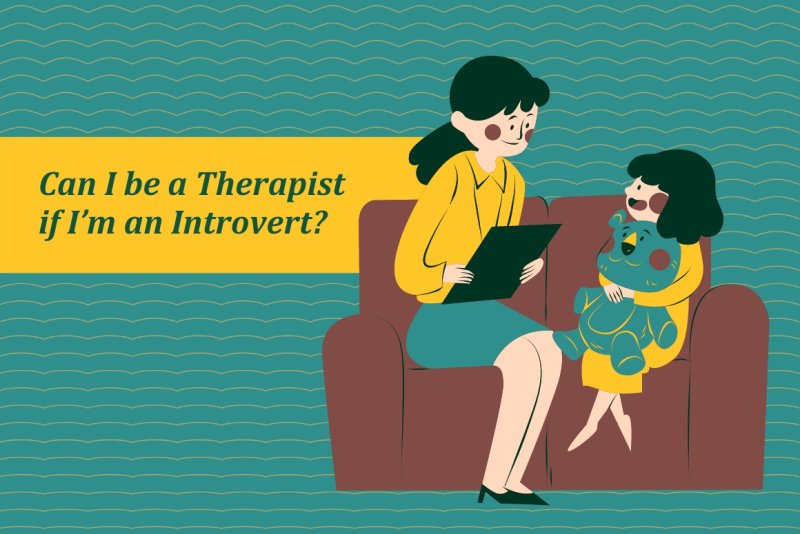
You're the one that people turn to, even in tough situations. You listen more than you talk, and somehow that's exactly why people feel truly heard around you. If a career in psychology or clinical counseling has been calling you, being an introvert isn't a reason to put that dream on hold.
Quick Answer: Yes. Introversion is not a barrier to becoming a therapist — for many people, it's an advantage. The traits that define introversion, like deep listening, careful observation, and comfort with one-on-one connection, line up closely with the skills that make a counselor effective.
A common misconception confuses introversion with shyness or being antisocial. In reality, introverts tend to value quality over quantity in relationships, which suits a profession built on deepening trust with clients one-on-one or in small groups.
Highlights
- Introversion and shyness aren't the same thing; introverts can be socially capable and deeply engaged with people, just perhaps in smaller doses.
- Active listening, the number-one skill in therapy, comes naturally to many introverts.
- Common licenses for this career path include the Licensed Marriage and Family Therapist (LMFT) and Licensed Professional Clinical Counselor (LPCC) credentials, both of which typically require a graduate degree.
- The U.S. Bureau of Labor Statistics projects double-digit job growth for mental health counselors and marriage and family therapists through 2034.
- Building recovery time into their schedule can help introverted therapists sustain their energy and avoid burnout.
What is an Introvert? (Introvert vs. Extrovert)
If your ideal evening is a quiet night with a book rather than a crowded party, you may lean introverted. According to Insider, introverts recharge through solitude and need downtime before and after socializing, while extroverts tend to draw energy from social interaction. Introverts still build close relationships, but prefer to invest deeply in a few rather than many.
Author Susan Cain, known for her research on introversion, has explained (via Forbes) that what can look like reluctance to engage is often a nervous system responding to too much stimulation, not a lack of interest in other people. Framed this way, a quiet presence in a classroom or meeting reflects self-regulation, not disengagement.
It's also worth remembering that introversion and extroversion sit on a spectrum more so than in two fixed boxes. Most individuals land somewhere in the middle. Understanding where you fall can help you choose a career, including one in psychology.
Is Psychology a Good Career for an Introvert?
Let’s get down to business. Becoming a licensed psychologist or clinical counselor is fundamentally about connecting with people, and introverts connect in their own way. Active listening, more listening than talking, is widely considered the top skill for a therapist, and it's a strength many introverts already possess.
A comfortability with silence and one-on-one focus supports the sustained attention that therapy requires, whether you eventually pursue licensure as an LMFT or an LPCC. See how these two credentials differ on PLNU's resource page.
The career outlook backs this up. Per the latest U.S. Bureau of Labor Statistics data:
| Job Title | Median Annual Salary | Projected Job Growth |
|---|---|---|
| Mental Health / Clinical Counselor (LPCC path) | $59,190 | 17% |
| Marriage and Family Therapist (LMFT) | $63,780 | 13% |
Both figures are well above the roughly 3% average growth projected across all U.S. occupations, meaning demand for thoughtful, licensed counselors, introverted or not, isn't slowing down.
__________
Who are you called to be?
Pursue your purpose at PLNU.
__________
Can an Introvert Become a Successful Psychologist?
Short answer: Yes. As Cain has pointed out, the idea of introverts as unfriendly or misanthropic isn't backed by research. While an extrovert, on the other hand, may gravitate toward sales or other highly forward-facing roles, one-on-one client work can be exactly where an introvert does their best work.
Introverts also tend to be sharp observers. A widely cited 2018 study found that introverted participants made more accurate judgments about others' behavior than extroverted participants did, a pattern researchers linked to introverts spending more time observing and less time talking. That attentiveness translates directly into a sharper read of a client's mood, body language, and needs.
Passion for therapeutic work also tends to outweigh hesitation about being naturally quiet. Licensed clinical social worker Laura Swanson has described, in an episode of
The Social Work Bubble Podcast, how her enthusiasm for the field overrides any instinct to hold back in session.
Qualities That Make a Good Introverted Therapist
Dr. Fallon Goodman, a clinical psychology researcher who studies social anxiety, has written about how introverts can not just survive but thrive in clinical work. Her core strategies, shared on Time2Track:
- Control your schedule where you can. Avoid stacking too many consecutive sessions back-to-back.
- Build in breaks. A 10- to 15-minute buffer after each session, to stretch, breathe, or simply sit in silence, helps prevent the fatigue of constant social engagement.
- Decompress after work. Give yourself permission to recharge in whatever way works for you once the day is done.
More recent guidance echoes these habits. GoodTherapy notes that therapists who are comfortable sitting in silence create space for clients, introverted clients especially, to reflect more deeply during sessions. The same source points to structured writing or journaling exercises as another tool introverted therapists can use to help clients, and themselves, process emotion without relying on constant verbal exchange.
Take the Next Step—Earn Your Master's in Clinical Counseling
Your quiet strengths, deep listening, observation, and a gift for one-on-one connection are exactly what the counseling field needs. Point Loma Nazarene University's M.A. in Clinical Counseling, offered both in-person and online, can help you turn those strengths into a career as a licensed counselor.
Frequently Asked Questions
Is psychology a good career for an introvert?
Yes. Many introverted traits, including deep listening, comfort with one-on-one interaction, and careful observation, align closely with what makes an effective therapist.
Can a shy person become a therapist or psychologist?
Shyness and introversion aren't the same thing, but neither is disqualifying. Shyness relates to social anxiety, while introversion is about where someone draws their energy from. With training and practice, both shy and introverted individuals can build the client-facing confidence therapy requires.
Will seeing clients all day drain an introverted therapist?
It can, just as it would for anyone managing back-to-back emotionally intensive conversations. Spacing out sessions, scheduling recovery breaks, and limiting daily client load are common strategies introverted therapists use to sustain their energy!
What license do I need to become a therapist?
Common paths include the Licensed Marriage and Family Therapist (LMFT) and Licensed Professional Clinical Counselor (LPCC) credentials, both of which typically require a graduate degree, supervised clinical hours, and a passing licensing exam score. See how these two paths differ if you haven’t already.