

If you’re interested in becoming a therapist, having a clear understanding of the right path to get there can make the process easier and more accessible. Therapists are admirable professionals who aid people in living happier and more enjoyable lives.
In fact, the American Psychological Association reports around 75% of those who receive therapy experience beneficial results. If you’re interested in helping people maintain a state of mental well-being, a career as a therapist is a viable way to earn a living while doing what you enjoy. Given the broad nature of the therapy field and related fields — such as counseling — you can benefit from having a clear vision of what these roles entail and how to qualify.
Highlights
- Therapists and counselors have different key functions — therapists work with the past to help current mental health concerns, while counselors typically work to resolve issues such as substance abuse.
- The career path to become a therapist begins with undergraduate and graduate school, usually from psychology programs, and is finalized when properly certified.
- A counseling degree such as the MACC (Master of Arts in Clinical Counseling) is a great example of a program to set you up for success to become a therapist with most graduate programs lasting about two years.
Therapist vs. Counselor: What Are the Differences?
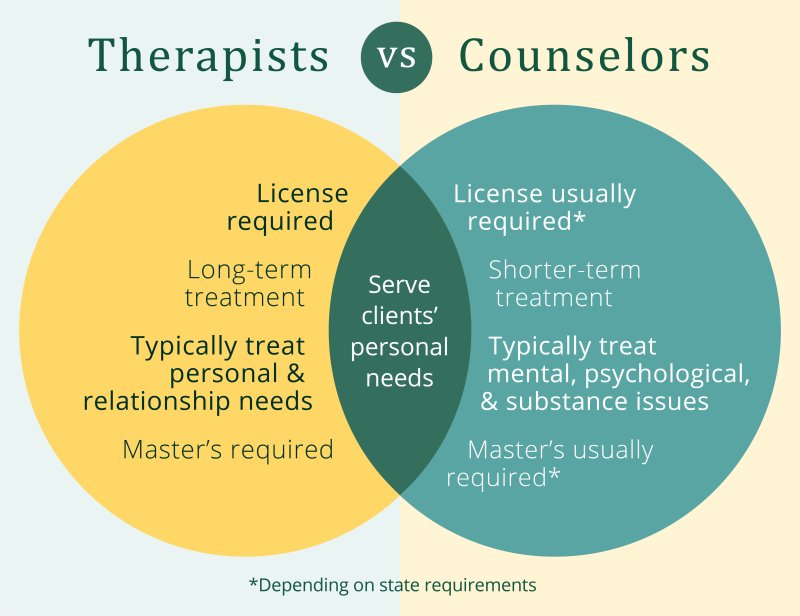
It can be tricky to distinguish between the roles of therapists and counselors. The job duties of these roles often overlap, and to make matters more convoluted, people often use the terms interchangeably. Though it may seem confusing at first, each of these roles has both qualifications and practices that are specific to themselves. To put these roles into perspective, it can be helpful to understand what each role’s responsibilities are and the qualifications required.
Not wanting to sit behind a computer screen all day? Learn about non-desk jobs you can pursue with a college degree.
Therapists
Therapists are mental health professionals who are licensed in their state to provide therapy and perform research to create a successful treatment plan for their clients. Therapy often involves a focus on talk therapy and usually aims to explore clients’ past and present experiences to uncover insights about their feelings, behaviors, or traumas. Therapists typically specialize in a specific field, such as marriage and family therapy. Therapists hold at least a master’s degree, while some choose to obtain a doctorate.
If a therapist chooses to advertise their practice as “psychotherapy,” then they must be licensed in the state in which they intend to practice. A licensed therapist is often qualified to practice specific types of counseling if they choose to, and in some cases do.
Counselors
Counselors, much like therapists, aim to help their clients with specific problems. However, counselors tend to focus more on helping their clients deal with psychological, mental health, and substance abuse issues than their therapist counterparts, who may concentrate on a client’s relationship-based and social needs.
It is typical for counselors to provide their clients with coping strategies and advice to deal with their problems practically and immediately.
Counselors can be sought out if someone has a problem which they want to receive treatment for a short duration of time, such as anxiety about a new career. Though some counselors are certified, some are not and rules vary in states about who is allowed to practice as a counselor. Some counselors hold only a bachelor’s degree while others are master’s degree holders.
__________
Advance your career and purpose.
Start a graduate degree at PLNU.
__________
How to Become a Therapist
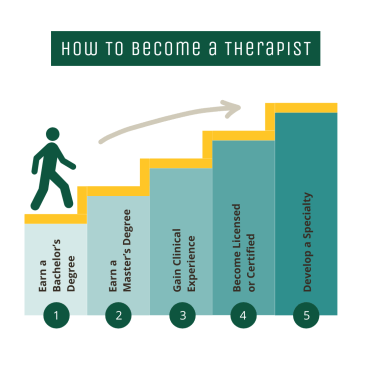
When pursuing a career as a therapist, there are several requirements that you’ll have to complete before beginning your career. Having a clear understanding of this process can make becoming a therapist less daunting and more manageable. Here are the steps you’ll need to complete to become a licensed therapist:
1. Earn a Bachelor’s Degree
The first thing you’ll need to do to become a licensed therapist is earn a bachelor’s degree. If you’re intent on becoming a therapist, then you should find an undergraduate degree in psychology or a related field. Gaining a foundational degree that exposes you to principles and practices of psychology will help prepare you for graduate school, and ultimately, for graduate school and give you the foundations of understanding to support others.
2. Earn a Master’s Degree
Once you’ve obtained your bachelor’s degree, a master’s degree can deepen your understanding and confidence in helping others. When choosing your master’s program, it’s important to be clear about which specific field of therapy you wish to enter. Most fields of therapy require you to have a certification before practicing, and many certificates require that you have a master’s degree before certification.
The master’s degree you pursue will depend on which certification you eventually intend to obtain. It will typically be a master’s degree in counseling, psychology, or social work. Be sure to know the specific requirements of your prospective certification before applying to a graduate degree program to ensure that you’re meeting the necessary requirements.
3. Gain Clinical Experience
To become a certified therapist, you’ll need to gain around 3,000 hours of supervised clinical hours, though this can vary depending on different certification and state requirements. Master’s degree programs that meet the requirements of specific licenses will often offer guidance and support when it comes to gaining the hours needed to become a licensed therapist. With the experience, you’ll be more than ready to start impacting lives.
4. Become Licensed or Certified
There are several avenues you can pursue to become a licensed therapist. Examples include the Licensed Marriage and Family Therapist (LMFT) certification and Licensed Professional Clinical Counseling (LPCC) certification. Each certification has unique requirements, such as a certain amount of supervised clinical work and master’s degrees that meet specific standards and passing two licensing exams.
It’s important to have a clear idea of which certification you eventually intend to obtain, as this will inform which program you’ll choose when pursuing your master’s degree.
5. Develop a Specialty
As you practice, you'll gain insight into where you want to specialize. Therapist specialties could include:
- Addiction
- Anxiety
- Depression
- Grief and loss
- Significant life transitions
- and more
Therapist Salaries and Job Outlook
To become a licensed therapist, you’ll need to finish all of the requirements of the specific licensure path you wish to pursue. For example, If you plan on becoming a licensed marriage and family therapist in the state of California, you’ll need to obtain a Licensed Marriage and Family Therapist (LMFT) certificate to practice. The LMFT requires that you first receive a master’s degree in a relevant field and gain a certain amount of clinical experience before becoming certified.
Whatever certification you plan to pursue, be sure to choose a program that meets the requirements for that license. Choosing a program that doesn’t meet the criteria for the license you’re pursuing can cost you a tremendous amount of time and money unnecessarily. Point Loma Nazarene University’s Master of Arts in Clinical Counseling meets all the requirements for certification, and is offered in both in-person and online formats.
Therapist salaries can vary widely based on field, level of education, location, industry, and whether a therapist decides to pursue private practice or commercial. According to the U.S. Bureau of Labor Statistics, the median annual salary of a licensed marriage and family therapist is $66,940, while the annual median income of all other therapists is $63,650. Other industries that boast higher than average marriage and family therapist salaries include physician’s offices and schools.
How Long Does It Take To Become a Therapist?
The process of becoming a therapist can vary depending on which path you choose. Including undergrad and graduate degrees plus clinical experience, students should expect a minimum of two to three years before becoming a certified therapist. After schooling, most certification requires you to gain clinical work under the supervision of other professionals for a certain amount of time — typically, you can expect around 3,000 hours to meet therapist licensure requirements.
Discover How a Master of Arts in Clinical Counseling Can Elevate Your Career

By gaining on-campus clinical experience, professional training, and career guidance, Point Loma Nazarene University can help you elevate your career and pursue the therapist role you’ve always aspired to reach. PLNU’s In-Person Master of Arts in Clinical Counseling or our Online Master of Arts in Clinical Counseling programs offer you the opportunity to meet the requirements you need to gain LMFT and LPCC certification and take your professional career as a licensed therapist to the next level.