
Plenary Address
“Neural Mechanisms of Social Homeostasis”
We are pleased to welcome Dr. Kay Tye of the Salk Institute for Biological Studies as the plenary speaker for the 50th Annual West Coast Biological Sciences Undergraduate Research Conference.
About Dr. Tye
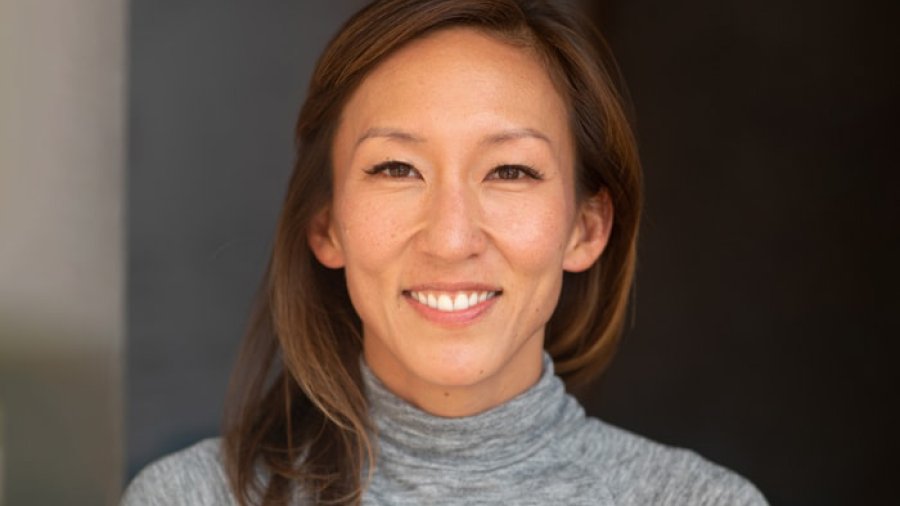
Dr. Kay Tye holds the position of Wylie Vale Chair at the Salk Institute for Biological Studies in La Jolla, CA.
She was born to immigrant parents, both of whom taught at Cornell University, her father as a physicist specializing in “string theory”, and her mother as a molecular biologist who made significant contributions to the understanding of DNA replication.
After earning her bachelor’s degree from MIT, she spent a gap year traveling around Australia on her own, then returned to the US to pursue doctoral studies in the laboratory of Patricia Janak at UC San Francisco. There, she studied how neurons in the amygdala influence reward seeking behaviors and assign emotional significance to environmental cues. Her post-doctoral work with Karl Deisseroth at Stanford University helped untangle how amygdala circuitry contributes to anxiety, depression and addiction.
In 2012, Tye joined the faculty in the Picower Institute at MIT, where her work focused on understanding the neurobiology of reward-seeking, emotional valence and social homeostasis, often asking how these insights can be translated to better understand psychiatric disease.
In 2019 Dr. Tye accepted her current position as professor in the Systems Neurobiology Laboratory at the Salk Institute.
Research
Understanding the Brain, Behavior, and Social Homeostasis
How does our brain rapidly determine if something is good or bad? How do we know our place within a social group? How do we know how to behave appropriately in dynamic environments with ever-changing conditions?
The Tye Lab is interested in understanding how neural circuits important for driving positive and negative motivational valence — seeking pleasure or avoiding punishment—are anatomically, genetically, and functionally arranged.
The lab studies the neural mechanisms that underlie a wide range of behaviors, ranging from learned to innate, including social, feeding, reward-seeking, and anxiety-related behaviors.
The lab has also become interested in “social homeostasis” — how our brains establish a preferred set-point for social contact, and how this maintains stability within a social group. Their research also examines how these circuits are interconnected with one another and how competing mechanisms are orchestrated on a neural population level.
To probe these circuits during behavior, the Tye Lab employs optogenetic, electrophysiological, electrochemical, pharmacological, and imaging approaches.
Honors and Recognition
Dr. Tye has received numerous honors, including the Blavatnik National Award for Young Scientists (2021), a Howard Hughes Medical Institute Investigator (HHMI) appointment (2021), Technology Review’s Top 35 Innovators under 35 Award, a Fellow of the Whitehall, Klingenstein and Sloan Foundation, recipient of the NIH Director's Pioneer Award (2017), and the Presidential Early Career Award for Scientists and Engineers (2016).
Learn More
For interesting insights into the life journey and current thinking of a scientist whose goal is to better understand how the human mind functions, see her recent interview with Dylan Neel.
For more information about Dr. Tye’s research and her team, visit the Tye Lab website.