
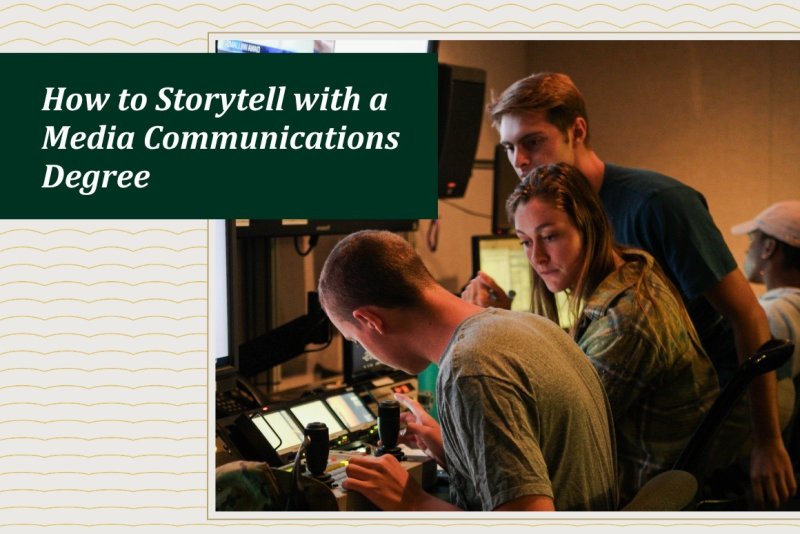
Have you ever watched a movie or read a book where you couldn’t put it down? You weren’t just hearing the story — you were in it, interacting with the protagonist, rallying against the antagonist, or feeling the emotion of a supporting character. Storytelling has the power to affect you in personal ways, and in the ever-changing digital world, there are more forms of storytelling than ever before. Media communication programs focus on helping students learn how to share stories across digital platforms. This skill is not developed overnight, but rather through a holistic education that combines hands-on learning experiences, theory, and a relational community that encourages one another.
What is Storytelling?
Since the dawn of time, humanity has been telling stories — first through oral communication and eventually through written stories. Storytelling has since shifted to a digital age, but the ideas and components of storytelling are long lasting. Storytelling is the craft of communicating ideas and experiences through a narrative, often with elements that can include characters, conflict, resolution, dialogue, and more. At its heart, storytelling helps humanize emotions, engagement, and complex ideas by shaping them into a mental or visual picture people can remember.
Why Storytelling Matters in a Digital Age
As the digital age is ever-growing, the art of storytelling is evolving, but it remains just as important. Storytelling is present everywhere — from television, film, radio, to new media production. Media and storytelling are not limited to creative spaces; they also play an important role in marketing initiatives, journalism, health communication, education, and many more professions. Developing the craft of storytelling is a necessary skill in the days ahead. At PLNU, students gain hands-on skills through learning experiences preparing for a wide variety of professional sectors in which storytelling is present.
How to Use Engaging Elements in Storytelling?
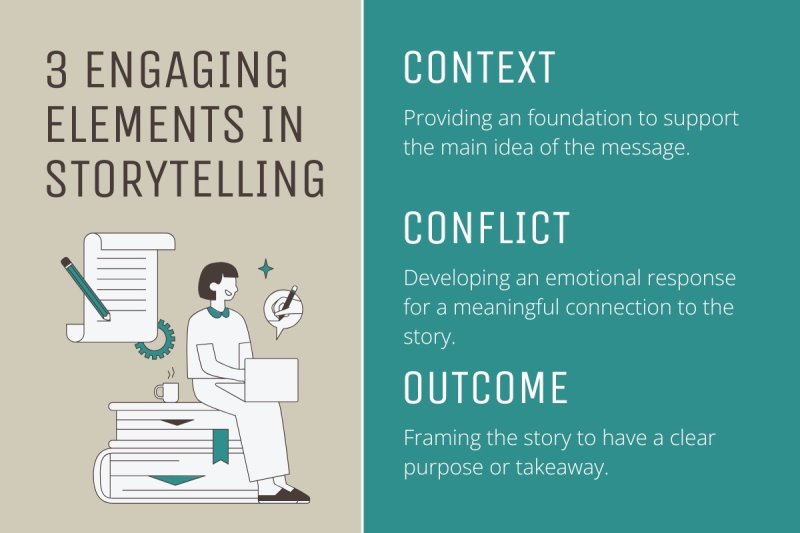
To share meaningful stories that audiences will remember, it is essential to incorporate three components to every story:
- Context: Sharing a memorable story requires a foundation. Providing the context helps establish the ideas the storyteller wants to communicate. Core elements such as characters, dialogue, and setting are essential to developing the narrative and helping audiences visualize the story’s world.
Conflict: Do you remember a time when someone may have said something hurtful to you? Now think about a time when you misplaced your car keys and could not remember where you left them? Moments involving conflict tend to be more memorable and often serve as the pinnacle of a story.
Neurologically, these moments are where we learn that humans are driven by emotion rather than data alone. The amygdala in our brain is responsible for the emotional responses to a certain scenario. When both the audience and the storyteller convey an emotion within a story, the amygdala helps determine how that memory is stored. The stronger the emotional response, the more significant the memory becomes. This is why we remember the hurtful comment more clearly than the moment we misplaced our car keys.
- Outcome: Sharing a meaningful story is not about manipulation, but about guiding audiences through an emotional journey. A key part about sharing stories is about having a clear purpose or takeaway. How or why do you want people to remember this story? When a storyteller understands the intended outcome or message, the story can take shape in a way that resonates with the audience.
Film and Media Courses to Develop Authentic Storytelling
How can a student actually learn the skill of storytelling? For some, it may come more naturally. But really, anyone can be prepared for a career in storytelling with the right education, whether they are sharing stories, multimedia or written narratives.
The Media Communication, B.A degree at PLNU equips students through a thoughtfully designed curriculum to create meaningful stories, develop media production skills, and prepare for a variety of career opportunities. Students begin with foundational media courses and grow into advanced classes such as
Scriptwriting for Television and Film, Media Literacy, and an Internship in Communication. Nathan Gibbs, a professor at PLNU, shares that he is dedicated to teaching students how to weave stories into the personal, spiritual, and professional lives of the world around them.
“You have to know how to learn because you will always have to keep learning new things. It’s important to come at a challenge with eagerness and excited nature. I know how things should look. I don’t know where the buttons are, but let’s go find them.” —Nathan Gibbs, M.F.A. Associate Professor of Media Communication
Hands-On Communication and Media Experience
At PLNU, a degree is more than sitting in a classroom: students develop skills through hands-on learning experiences. Throughout a student's academic journey in media communication or journalism, students can take courses such as Introduction to TV and Film Production, Multimedia Workshop, and Advanced Media Practicum. In many of these courses, students have the opportunity to develop, lead, and create media projects to add to their resumes.
Sundance Film Festival
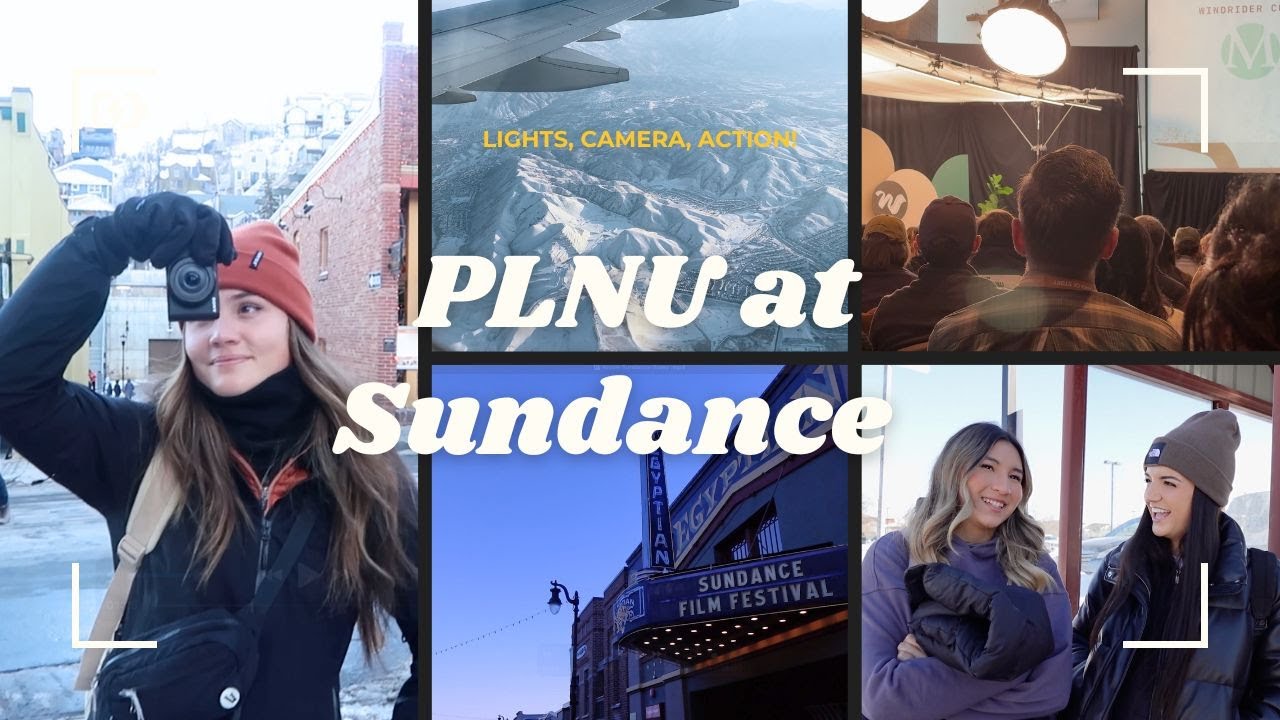
Once a year, students in the Media Communication program at PLNU have the opportunity to attend the Sundance Film Festival. Originally held in Salt Lake City, Utah, and now hosted in Boulder, Colorado, the festival allows students to critically analyze the aesthetics and themes presented in a wide range of professional films. During this week, students earn one unit toward graduation.This experience allows students to gain firsthand knowledge from directors, producers, and actors that they can apply to their own work and skill sets both in and beyond the classroom.
Lomaland Film Festival
Through experiential learning and opportunities to analyze professional work at events like Sundance, students also develop storytelling skills by creating their own projects to share with peers, faculty, and the community.
At PLNU, the Lomaland Film Festival is an annual event that highlights the work of students from across campus. Students have the opportunity to share the stories they are passionate about while showcasing their short films to a large audience.
PLNU Students Telling Their Stories
Tell Your Story at PLNU
Are you passionate about telling stories of the past, present, or future? A Media Communication B.A. at PLNU might be the academic pathway for you. This major can prepare you for a wide range of careers in television, film, radio, and new media production, as well as media management.
Want to discover how PLNU can support you on your higher education journey? Reach out to an academic advisor today and take the first step toward a career in media communication.